Sunday, May 24, 2020
Sunday Smith #59: Model 696, 1996
The compact large-bore revolver has had a devoted following in the United States ever since the first Webley "British Bulldogs" were imported in the 1870s. They were copied far and wide and the name "Bulldog" just became generic slang term for a small-frame revolver chambered for a .44 or .45 cartridge. It was a cheap Belgian copy of the Webley original that was used to assassinate the 20th President of the United States, James A. Garfield.
In the 1970s, Charter Arms launched a compact five-shot .44 Special revolver, called the Bulldog in a sort of homage to the 19th Century snubs, and it was a runaway sales success for them. By the early Nineties, you could even buy Brazilian alternatives to the domestic Charter Arms, in the form of Taurus's Model 431 and Rossi's Model 720.
Not being a company that would pass up the chance to stick a pot out the window when it was raining soup, in late 1996 Smith & Wesson added their own compact 5-shot .44 Special to the mix in the form of the Model 696.
Based on the L-frame, which was the beefier of Smith's two medium frame sizes that was intended to stand up to extended use of hot .357 Magnum ammunition, the Smith was slightly larger than its competitors at the time. They featured a 3" heavy barrel with a full underlug, a round butt, and adjustable sights.
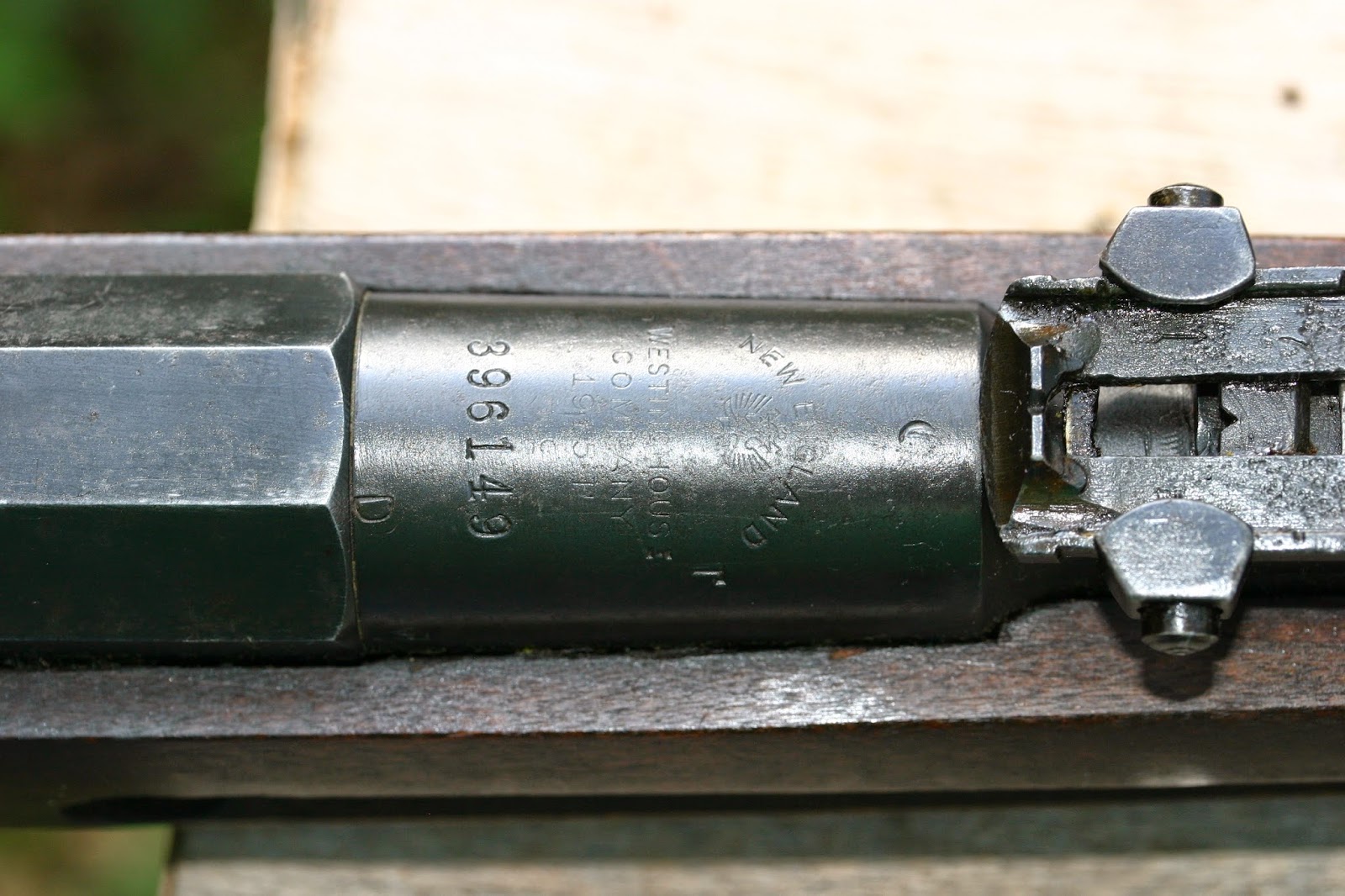
Very early in the production run, distributor Lew Horton ordered a batch of 286 guns that they shipped to Mag-Na-Port, and this is one of those guns.
Two other quirks common to very early production 696's are also apparent in this piece. First, the chambers on some of the earliest guns were cut too long and they will chamber and fire .44 Magnum rounds, which is unsafe so don't do it. (Yes, I know of people claiming they've had no problem with milder 240gr loads. It's still a bad idea. Don't.) The second quirk is that the forcing cones on some of the early barrels were cut at the wrong angle, causing them to blow out easily. If you look closely at the silhouette of the forcing cone in the above photo, you will know what a blown-out forcing cone looks like.
The pictured revolver was a gift from a friend, as it had been sitting in his safe, unfired and unfireable for...well, a long time.
Getting it sent off to Smith to see if it can be re-barreled is on my list of things around to which I need to get.
.
Sunday, May 17, 2020
Sunday Smith #58: Model 59, 1978.
After the failure of their first semiautomatic pistol design, Smith & Wesson wouldn't return to the autoloader business for almost three decades. Instead, they stuck to building revolvers, where they were a dominant market force.
After the Second World War, however, influenced by the double-action Walther P38 with its hammer-dropping safety, and with the possibility of military contracts dancing in their heads, Smith decided to dip their toe back into that market again.
Carl Hellstrom had recently become president of the company, the first time that post had been held by anyone without the last name "Wesson". Pledging to revive the fortunes of Smith & Wesson, which had nearly gone toes-up during the collapse of the Light Rifle program for England, Hellstrom tapped chief designer Joe Norman to come up with a modern 9mm pistol.
While the US military did test some prototypes, interest in contracts didn't materialize. Smith went ahead and launched the 8-shot single stack 9mm in 1956, dubbing it the "Model 39" the next year, when model numbers were assigned to all Smith handguns.
During the Vietnam War, suppressed Model 39's (referred to as "Hushpuppies") were used by Navy SEALs, and Smith dabbled with a couple samples that were altered to accept double-column Browning High Power style magazines.
In 1971, these widebody pistols entered commercial production as the Model 59, incorporating the latest updates from the newest Model 39-2 variant, including a narrower, shorter extractor that was tensioned by a separate coil spring, to replace the long, flat, self-sprung extractor earlier 39's had used.
Even in a side view from a distance, the Model 59 can be distinguished from its lower-capacity forebear by the step in the aluminum alloy frame just aft of the slide stop, where it's widened to accommodate the fatter double-stack magazine, and by the flat backstrap, replacing the arched curve of the one on the 39. This helped keep the grip diameter to manageable proportions.
By combining the double-stack magazine of the Browning High Power and the DA/SA action with hammer-dropping safety of the Walther P-38, the Smith & Wesson 59 presaged the next generation of autoloading pistols, called "WonderNines" in the gun rags of the day.
They were increasingly successful with law enforcement agencies in the US and remained in the catalog through 1982, after which it was replaced by its improved "Second Generation" successors: the Model 459 (carbon steel slide, alloy frame), Model 559 (carbon steel slide & frame), and Model 659 (stainless steel slide & frame).
The above example, a nickeled Model 59 from the era of Baretta and Starsky & Hutch, was purchased from my local gun shop late last year for around $400. It shows few signs of use, and all the controls and small parts still show the high-polished blue finish they came with from the factory.
.
Wednesday, May 16, 2018
Sunday Smith #57: Model 457, 1999
By the time the Third Generation Smith autopistols hit the market in the early Nineties, pistols like the Glock and Ruger's P-89 were putting relentless downward pressure on prices. Smith & Wesson replied with the Value Series versions of their Third Gen pistols, distinguished with three-digit model designations (that, confusingly, hewed to yet a different numbering convention than either the Second or Third Generation used.)
Initially, the Value Series guns were largely distinguished by a cheaper matte-blue finish and a single-sided thumb safety but by the time of the turn-of-the-millennium Model 457 shown above there were bunches more cost saving corners cut. For instance, both the sights and the mag release are plastic, and the top of the slide features flat bevels instead of being radiused.
The pistol itself is a traditional double-action .45ACP with a 3.75" barrel and a seven-shot single-stack magazine. It's somewhat smaller than a Colt Commander and, interestingly, was the only way to get an alloy-framed subcompact Third Gen .45 Smith other than the 4513TSW variant or the Chiefs Special CS45. The main line Third Gen 4516 was only offered with a stainless steel frame and was thus brick-heavy for its size.
MSRP of the gun in the 2001 catalog was $591, which meant a street price around five bills. This slightly undercut the Glock 30, still the new and fresh darling of the market at the time, but the latter held ten shots to the Smith's seven and wasn't marketed as a "Value" gun. For not too much more, you could get the American-made Sig P245, which was one of Sig's first value-priced offerings, yet which benefitted from that Sig brand halo.
Introduced in 1996, production of the 457 ended in 2006, like most of the rest of the Value Series guns. The above, well-worn example was purchased at a local gun store in 2017 for $275.
.
Sunday, March 26, 2017
Sunday Smith #56: Model 2206, 1996
Since the discontinuation of the ill-fated Model 61 Escort in '73 and well into the '80s, Smith & Wesson didn't have any rimfire self-loading pistols other than the high-end Model 41 target gun. Meanwhile Ruger's target autos were selling like gangbusters and revolver sales as a percentage of the market were starting to slump. Smith needed a cheaper gun to compete in the plinking end of the market.
They got there by taking the basic design of the Model 61, which itself was derived from a long gone Belgian pocket auto, and stretching the barrel and butt into a 10-shot target pistol available with either a 4.5" or 6" barrel, called the Model 422.
Debuting in 1987, the 422 was soon joined by a version with a stainless slide and clear-coat anodized aluminum frame, which in keeping with current S&W numbering practices was the 622. (The number "6" being, generally, a S&W designator for stainless steel. Like most languages, S&W model numbers are best learned by immersion and osmosis rather than from a dictionary.)
Just as these guns were hitting the market, the centerfire S&W pistol world was transitioning from the "Second Generation" guns with their three-digit designators to the "Third Generation" autos, which bore four-digit model numbers. Perhaps with an eye to that, when the all-stainless version of the rimfire plinker debuted in 1990, it was designated the Model 2206.
The six-inch version of the 2206, pictured above, hit the market with an MSRP a whisker under $400 in 1990. It's a hefty gun, weighing in at an honest 39 ounces, which is, like, M1911 heavy. Recoil is pretty much non-existent. Even high-velocity loads are practically like shooting an airsoft gun.
This whole line of pistols was never really a sales threat to the dominant Ruger autos and were superseded in the late 1990s by the much simpler to build Model 22.
The pictured gun, featuring an aftermarket threaded barrel, was purchased from an internet friend for a little over three bills in 2016. Standard Catalog of Smith & Wesson, 4th Edition says $275 for EXC and $225 for VG and add $40 for adjustable sights. An ANIB example configured like the one above (less aftermarket barrel) would book at $390 w/box & docs in the SCSW4E.
.
Monday, March 13, 2017
Sunday Smith #55: Model 745, 1988
With their Second Generation auto lineup in the mid-Eighties, Smith & Wesson offered a .45ACP pistol that was more or less aimed right at a chunk of Colt's 1911 market share. A honking-big handgun weighing in at almost 38 ounces empty, the eight-shot Model 645 was priced to undercut the classic offering from Colt and had more modern DA/SA lockwork.
One place it had difficulty making inroads was in the growing sport of action pistol shooting, where customized 1911-pattern guns from Springfield and Colt ruled the day. So based on some custom work done on personal guns by their in-house gunsmiths, Smith & Wesson released a competition-oriented variant of the Model 645, dubbed the Model 745.
The initial run came with the serial number prefix "DVC", for the IPSC motto of "Diligentia, Vis, Celeritas", or "Accuracy, Power, Speed". They also had special IPSC 10th Anniversary engraving on the slide.
The guns featured special Novak sights and a single-sided safety with enlarged paddle-like shape. Note that, unlike conventional S&W autos, depressing the safety does not drop the hammer. This is because the 745 borrows from the lockwork of the similarly competition-oriented Model 52 .38 Wadcutter gun and is single-action only.
The slide release is enlarged in a fashion similar to the safety, and the magazine release features an oversize button as well. There's an overtravel stop set in the frame behind the trigger, and checkering on the front- and backstraps.
Its parent gun, the 645, was discontinued in 1988, replaced by its Third Generation successor, the Model 4506, but the 745 continued in production for another couple years before being discontinued as well. Its own successors, the Model 845 and 945 came from the then-new Performance Center.
The gun in the photos was acquired at a gun show in Louisville, Kentucky in early '17 for $700.
.
Sunday, February 19, 2017
Sunday Smith #54: Model CS9 9mm Chief's Special, 1999
After the market failure of their first attempt at a centerfire autoloader in the mid-1930s, Smith & Wesson abandoned that market niche to archrival Colt before taking another run at it with the 1955 launch of the gun that was to become the Model 39.
The Model 39 was a slim 9mm pistol with a double-action first shot and a hammer-dropping safety that was a conceptual copy of that found on Walther autopistols. The pistol eventually became the conceptual head of a whole family of autoloaders of all calibers and sizes, but back in its infancy, one of the most popular modifications was cutting it down to make it more concealable.
Model 39 pistols with shortened slides and grips were sold by Armament Systems and Procedures (ASP), Devel, Trapper Gun, and others I'm likely forgetting at the moment. Naturally, it was only a matter of time before Smith started producing factory compact guns.
It's interesting that one of these factory compact guns marks the twilight of the family of pistols spawned by the Model 39. The "CS9", or "Chief's Special 9" attempted to revive the original name attached to the J-frame snubbie revolver and hang it on what the marketing department called "An Autoloader for the 21st Century".
The problem for Smith was that the gun was nothing of the sort. Every step was taken to trim production costs on the basic early '50s design: Simple plunge-milled slide serrations. Flat bevels instead of radiused curves on the top of the slide. A plastic disconnector.
There was still no way to sell the gun at a price competitive with the plastic, striker-fired guns that were overrunning the market without selling at unsustainable profit margins. Imported players like Beretta and Sig Sauer could hold off the plastic juggernaut for a while by trading on upmarket Euro cachet, but Smith's traditional metal autos found themselves price-shopped against both the invading Glock and the domestic Ruger P-series guns, with the latter being based on a thirty-year younger design optimized to use much cheaper castings for major components, unlike the machining-intensive Smith.
The Chief's Special series, which included a CS40 and a CS45 to go with the 9mm version, was pretty much the swan song of the traditional double action metal-framed Smith auto. Introduced in 1999, the .40 cal version was gone by '03 while the 9mm and .45 variants remained through 2006.
The seven-shot CS9 is a light, easily-concealed gun, not too much larger than the current six-shot Glock 43. Depending on condition, prices could run into the low five bills, but most examples seem to be cheaper. The pictured gun was found in excellent condition in a local gun store counter in 2014 for not a lot of money, three-and-change if memory serves.
Monday, November 21, 2016
Pocket Pistols...
Last Friday I took a couple of .25 ACP pocket pistols along to the range, just to see what shooting them would be like alongside the newest offering in the field, Ruger's LCP II.
The classic offerings all weigh in at around 12-13 ounces empty, with the Harrington & Richardson being lightest and the Colt at the heavier end of the trio. Despite being a recoil-operated .380 instead of a simple straight-blowback .25, the Ruger was almost two ounces lighter than the lightest of the older guns.
Like the LCP II, the H&R and the Steyr Pieper are hammer-fired, while John Browning's vest-pocket Colt 1908 is a striker-fired gun. While the LCP II has small sights for a modern arm, they look like target Bomars when compared to the vestigial nubbins on the Steyr and Colt. The H&R, on the other hand, has not even the faintest suggestion of anything sight-like to mar the smooth upper curve of the slide and barrel.
I rifled my ammo storage and other than a box of Gold Dots in 1990's-era packaging and half a blister pack of Glasers that probably date to Bill Clinton's first term, all I had was a collector-quality old box of Winchester. I brought it along to the range, but fortunately Indy Arms Co. had some PPU .25 ACP ammo in stock.
So how did they run?
Ten rounds were fired at the lower left target from a distance of five yards with the Ruger as a sort of calibration. No particular care was taken to get the tightest group possible, just squeezing shots off as I got a decent sight picture.
From there, seventeen rounds were fired at the lower right target with the Colt 1908. The Colt's sights were vestigial, maybe, but it fit the hand well and the trigger breaks at a consistent 4.25#, making it pretty easy to cluster the rounds around the bull from five yards out. The gun ran like a top, other than experiencing one light strike on a hard Prvi Partisan primer.
Next up was the H&R .25. The t-square proportions of the gun make it hard to remember to keep the muzzle up; it wants to point low. The safety is also bizarre, being up-to-fire. The magazine, and aftermarket probably from Triple-K, will allow seven rounds to be inserted, but that ties the gun up badly; it's a six round mag. The Webley-designed pistol has a pair of recoil springs in the slide, on either side of the firing pin, which bear against a pair of lugs on the rear of the frame.
As you can see, the accuracy was suboptimal. Of the seventeen rounds fired, one is out of frame and another was off paper entirely. I tried very hard to use what Jim Cirillo called a "silhouette point", but still dropped rounds out of the bull willy-nilly from fifteen feet.
Next was the Steyr Pieper M1908. The magazine was not the correct one, but it did feed rounds. It had a couple failures to extract, which made for messy malfunctions in this tiny extractorless gun, tip-up barrel or no. It took a couple tries at a few of the primers to light them off and finally stopped popping caps after seven rounds. I need to take it apart and see if the hammer spring is tired or if the firing pin broke or what.
So I just loaded up the remaining rounds intended for the Steyr in the Colt's magazine. It, too, started having trouble lighting primers toward the end. Striker-fired gun, hard PPU primers, a 107-year-old striker spring, and the fact that the gun was drier than a popcorn fart were probably all contributing factors. Still, it lit off thirty or so before things got iffy.
The Steyr is mechanically interesting, the H&R is fun if hitting your target is not high on your priority list, but the Colt is obviously the most functional gun of the trio.
.
Saturday, November 19, 2016
Sunday, April 03, 2016
Classic Colt #2: Colt New Line .22
When the Rollin White patent for bored-through cylinders, held by Smith & Wesson, expired in 1870, Colt's was ready with challengers to Smith's various product lines. In 1873 they introduced a direct competitor to Smith's bread and butter wheelgun, the tip-up No.1, in the form of a seven-shot solid-frame .22 rimfire revolver with a single-action spur trigger, the New Line .22.
"New Line" distinguished these solid-frame pistols from their open-top frame forebears. Unlike the tip-up Smith, reloading was accomplished one round at a time through a port in the right side of the recoil shield.
Nickel plated over its brass frame (larger caliber ones appear to have bronze frames), steel barrel & cylinder, and with rosewood grips, it's an adorable little thing. Early ones had conventional cylinder stop notches around the periphery of the cylinder, but later ones, like this 1876-production example, locked up on the rear of the cylinder and had longer cylinder flutes as a result.
Note the pretty nitre-blue on the pin below the loading cutout, and the small amount of niter-blue on the head of the trigger screw on the other side. The bottom of the hammer spur and rear face of the hammer still show this color as well.
Production ran from 1873 to 1877, with 55,343 produced before it was dropped from the catalog in the face of much cheaper competing "suicide specials".
This one was purchased from a local gun store in 2014 for $99. It needs some work, but for a gun built in the centennial year of our nation, it seemed a reasonable price.
.
Tuesday, March 08, 2016
Use it up, wear it out, make it do, or do without...
The Dreyse 1907 is a .32 ACP blowback pistol that, while obviously influenced by FN's Browning 1900, dodges its patents by using a slide that does not completely enclose the barrel. Instead, the breechblock, which is inside the frame, has a long forward extension running above the barrel. This is the part that has the cocking serrations visible in the photos.
First and Second Variant are pictured above. The guns were produced from 1908 until shortly after the Great War. The top pistol, with a serial number of 66742, is of antebellum vintage, while the second, number 234589, is a much later production gun. Both guns were claimed to be WWII GI bringbacks.
Note the lanyard rings: The 1907 was a popular police pistol and was purchased by the nascent Czech army immediately following the First World War.
The later gun shows an interesting repair where the frame had cracked through at the corner and was repaired by drilling laterally completely through the frame and riveting. I'm not sure I'd trust it to shoot, but I don't have Allied tanks overrunning my neighborhood, either.
Or perhaps it was one of the few pistols a member of the anti-Nazi resistance could get their hands on, and they needed to keep it working? Or perhaps it was just one of the ones exported to the Czech army, which were removed from service for unspecified safety reasons after only a few years.
Either way, the gun was worth the $20 asking price. How could I refuse?
For the most detailed online Dreyse resource, check the Unblinking Eye.
.
Labels:
German pistols,
pocket pistols,
The Thirty Two,
WWI Pistols
Monday, October 26, 2015
Reincarnated Rimfire
Picked up this interesting little piece from a friend at the Indy 1500 gun show this past weekend.
It's a Smith & Wesson .32 Safety Hammerless 1st Model (popularly known as the "Lemon Squeezer" for the grip safety on the backstrap.) This one, however, has been professionally and painstakingly converted from .32 S&W to .22 rimfire.
The most obvious visual clue is the spring-loaded underbarrel ejector rod assembly, Ã la the Colt Peacemaker.
The pinned half-moon thumbnail of the factory front sight has been replaced with a Marble unit.
The barrel has been bored out and sleeved to .22 caliber.
Here's a detail of the rear of the ejector rod assembly as well as the cylinder face, where you can see the faint traces of the .22 chamber sleeves inset into the bored-out .32 chambers.
The sleeved chambers from the breech end. The cylinder's serial number is much later than the frame's.
I would LOVE to know the history of this gun. The work is immaculate and the re-nickel job is quite nice.The frame dates to 1898, making it an antique, although the cylinder is later, so it's unlikely that the conversion dates to the twenty-year stretch from 1881-1901 where S&W didn't have any .22s in their lineup.
.
Wednesday, January 28, 2015
Harrington & Richardson .25 Self-Loading Pistol
| H&R Self-Loading .25 pistol. The safety worked backwards from the usual, in that up was "fire" and down was "safe". |
"In a firearm, the combination with a frame having a forward extension, a reaction spring mounted in said forward extension, and a barrel, of a breech block or bolt carrier having a semitubular, forward extension to inclose the barrel and to engage said frame and to slide thereon..."In other words, Colt's had the patent to the one-piece slide and breechblock. Remington and Savage dodged this patent with their designs from John Pedersen and Elbert Searle having the breechblock as a piece separate from the slide. H&R went in a different direction by licensing designs from English gunmaker Webley & Scott in which the slide did not "inclose the barrel".
| From top to bottom: Webley .455 Auto, H&R .32, H&R .25, Webley .32 |
![]() |
| No sights, but it has a loaded chamber indicator. |
Although in the catalog from 1912 until 1920, some sources say that production of the .25s actually stopped in 1916, and remaining sales after that date were out of unsold stock. At any rate, only 16,000 were produced, making it one of the rarer early American pocket autos.
Sunday, September 21, 2014
Sunday Smith #53: .32 Hand Ejector Model of 1896
![]() |
| .32 Hand Ejector Model of 1896 |
The top-break latching mechanism on the pocket guns went through several changes to strengthen it before winding up with the familiar "T"-shaped lifting toggle, but no small toggle could be as strong as a solid frame, and in the last decade of the 19th Century, Smith followed Colt onto the market with a solid-framed revolver utilizing a cylinder that swung out to the side for loading and unloading.
The ejector in the new revolver differed from the automatically-operated ones in the top breaks by being a plunger worked by the shooter; hence the new design's designation as the "Hand Ejector" models.
The first one on the market was a pocket-sized gun chambered for a new .32 caliber cartridge known as ".32 S&W Long", which utilized a longer case to prevent the new cartridges from being loaded into older .32 top-breaks. The fluted cylinder had the patent dates and manufacturer's name roll-marked between the flutes rather than atop the barrel; a quirk shared with the contemporary .44 top-break "Favorite" and no other Smith.
![]() |
| It looks weird with no thumb latch. |
![]() |
| A comparison of the arrangement of the sideplate screws of the first .32 Hand Ejector and a 1970s-era Model 31-1 in .32 S&W Long. |
Less than 20,000 were made before it was replaced in 1903 with a new .32 Hand Ejector that was almost fully modern in construction, the odd little lungfish of a gun was never screamingly popular, although it did see service with some police departments, including Philadelphia and Jersey City. Its successors, though, would be some of the most prolific and frequently-copied handguns on the planet.
Saturday, May 17, 2014
Classic Colt's preview...
![]() |
| Colt's New Line .22 Pocket Revolver |
![]() |
| S&W Model 1, 3rd Issue (top) and 2nd Issue (bottom) |
.
Sunday, May 11, 2014
Sunday, January 12, 2014
The other Model 1873 revolver...
Still raw from their defeat at the hands of the Prussians, the army of the French Third Republic underwent a fairly comprehensive, ground-up program of rearmament, and not even the lowly service handgun was left out.
While double-action Lefaucheux pinfire revolvers had seen use with the French navy, the new MAS Mle. 1873 was the first metallic cartridge handgun adopted as standard issue by the French army. Introduced the same year that the U.S. Army adopted the single-action Colt, the Mle. 1873 was a solid-frame double action revolver that used a swing-open gate for loading and unloading, with cartridge ejection chores being handled by a spring-loaded rod in a housing that ran parallel to the half-octagonal barrel.
In another similarity with the Peacemaker, the Mle. 1873 shared its bore diameter with the Mle. 1866 Chassepot service rifle and its imminent replacement, the Mle. 1874 Gras. Unlike the Colt, whose potent .45-caliber round was one of the most powerful handgun cartridges of the black powder era, the MAS fired an 11mm round that dribbled its fairly light 180gr bullets out the muzzle at leisurely velocities less than 700 feet per second.
Colt's first double action revolver in a service caliber, the M1878 "Frontier", is a far more gracile piece than the MAS. However when compared side-by-side, the more martial nature of the French wheelgun is obvious. For instance, it can easily be field-stripped: Using the cylinder pin as a screwdriver, a single screw is removed, allowing the sideplate to be lifted off.
The sideplate retains the left-hand grip panel. Et voila! You have now probably stripped the gun as far as caporal-chef Jacques had any need for taking his gat apart in a foxhole. Taking it down further wouldn't be hard, provided you have someplace to set the fiddly bits. There is even a handy pivoting lever under the grip panel, complete with a knurled tab for a thumbpiece, that can be used to remove the mainspring.
By comparison, the Colt Frontier requires screwdrivers and some needle-nose pliers, and you'd probably best just forget about messing with the lockwork unless your dog tags say "Grant Cunningham".
While the Colt was never standard U.S. issue, a version was contracted with the intention of using them to arm the Philippine Constabulary in the early 20th Century. The MAS Mle. 1873 was the front-line French revolver for roughly twenty years, until replaced by the 8mm M1892, but remained in second-line service through the First World War, and even into the Second.
While double-action Lefaucheux pinfire revolvers had seen use with the French navy, the new MAS Mle. 1873 was the first metallic cartridge handgun adopted as standard issue by the French army. Introduced the same year that the U.S. Army adopted the single-action Colt, the Mle. 1873 was a solid-frame double action revolver that used a swing-open gate for loading and unloading, with cartridge ejection chores being handled by a spring-loaded rod in a housing that ran parallel to the half-octagonal barrel.
![]() |
| MAS Mle. 1873 French ordnance revolver. They were issued in the white. |
Colt's first double action revolver in a service caliber, the M1878 "Frontier", is a far more gracile piece than the MAS. However when compared side-by-side, the more martial nature of the French wheelgun is obvious. For instance, it can easily be field-stripped: Using the cylinder pin as a screwdriver, a single screw is removed, allowing the sideplate to be lifted off.
![]() |
| This one's missing the ejector rod housing as well as the head of the cylinder base pin |
![]() |
| Contemporaries. |
![]() |
| The loading gate on the MAS pivots rearward instead of outward. |
Monday, December 16, 2013
An idea...
Noodling around with the Webley .32, I suddenly got an idea.
One of the oddest features of the little Webley/H&R automatics is their thumb-operated manual safety. It's located fairly far forward on the gun to those used to Browning-pattern pistols and, worse, its operation is backwards: Up is for "fire" and down is for "safe".
However, the lever is a long and thin one and almost seems to be designed to keep the thumb from fouling the slide as it almost certainly would if the positions were reversed. Obviously I need to go do some shooting with this thing.
Sunday, November 10, 2013
Sunday Smith #52: Model 61-2 Escort, 1970
Smith & Wesson was traditionally a manufacturer of revolvers. The company's name and fortune had been built on the Rollins-White patent for the bored-through cylinder, and all through the 19th Century they produced nothing but revolvers, save for the occasional single shot target pistol on a top-break revolver frame or shoulder-stocked revolver carbine.
S&W's first foray into self-loading pistols in the early 1900s was enough of a flop that it wasn't 'til the 1950s that they got back into the market, and then with service-sized autos chambered in 9mm rather than the small vest-pocket type like their earlier venture.
Smith had been working on a new pocket pistol already when legislation that was passed in 1968 caused a market vacuum. The Gun Control Act precluded the importation of handguns that could not obtain a certain amount of "points" on a scale that determined their suitability for sporting purposes. Overnight, an entire class of small, inexpensive imported pocket pistols was wiped from the marketplace and a domestic manufacturer would be foolish to not exploit this opportunity for a windfall.
Like a half-century earlier, Smith & Wesson's offering was based on a Belgian design. This time the template was the Pieper Bayard 1908, best known for being one of the smallest .380 semiautomatic pistols ever sold.
By switching from .380 to .22LR, Smith could utilize a much less expensive cast aluminum frame rather than a machined steel one. The resulting pistol, which hit the market in late 1968, was small, light, reasonably-priced and marketed as the Model 61 "Escort", a name suggestive of its intended role as portable protection for pocket or purse.
Not long into the production run, S&W added a magazine safety, with the resulting model marked "61-1", in the company's tradition of denoting engineering changes with a "dash" number. For 1970, a bushing was utilized to allow more precise barrel fitting, and the result was the 61-2 like the example shown here. The last variant, before production ended, was the 61-3 which used a frame machined from an aluminum forging rather than the cast frame of the earlier variants.
This 61-2 in LNIB condition was acquired for just over $200 in February of 2013. The box bears the price tag from a no-longer-extant downtown Indianapolis gun shop. The tag reads "$46.50".
More good info on the Model 61 Escort can be found here and here.
.
S&W's first foray into self-loading pistols in the early 1900s was enough of a flop that it wasn't 'til the 1950s that they got back into the market, and then with service-sized autos chambered in 9mm rather than the small vest-pocket type like their earlier venture.
Smith had been working on a new pocket pistol already when legislation that was passed in 1968 caused a market vacuum. The Gun Control Act precluded the importation of handguns that could not obtain a certain amount of "points" on a scale that determined their suitability for sporting purposes. Overnight, an entire class of small, inexpensive imported pocket pistols was wiped from the marketplace and a domestic manufacturer would be foolish to not exploit this opportunity for a windfall.
Like a half-century earlier, Smith & Wesson's offering was based on a Belgian design. This time the template was the Pieper Bayard 1908, best known for being one of the smallest .380 semiautomatic pistols ever sold.
By switching from .380 to .22LR, Smith could utilize a much less expensive cast aluminum frame rather than a machined steel one. The resulting pistol, which hit the market in late 1968, was small, light, reasonably-priced and marketed as the Model 61 "Escort", a name suggestive of its intended role as portable protection for pocket or purse.
Not long into the production run, S&W added a magazine safety, with the resulting model marked "61-1", in the company's tradition of denoting engineering changes with a "dash" number. For 1970, a bushing was utilized to allow more precise barrel fitting, and the result was the 61-2 like the example shown here. The last variant, before production ended, was the 61-3 which used a frame machined from an aluminum forging rather than the cast frame of the earlier variants.
This 61-2 in LNIB condition was acquired for just over $200 in February of 2013. The box bears the price tag from a no-longer-extant downtown Indianapolis gun shop. The tag reads "$46.50".
![]() |
| Blue 2-piece box w/reinforced corners. $46.50 price tag from Emro's Sporting Goods. |
![]() |
| Padded leatherette carrying case and cleaning tools. |
![]() |
| The gun itself, with its "woodgrain" plastic grips. Included in the box is an advertisement for Smith & Wesson-brand ammunition. |
![]() |
| Smith & Wesson Model 61-2 Escort with a brace of its Bayard 1908 antecedents, one in .32 and one in .380. |
More good info on the Model 61 Escort can be found here and here.
.
Sunday, October 20, 2013
Imported technology...
![]() |
| Our American Cousin... |
In addition to adding a grip safety, magazine safety, and loaded chamber indicator, the H&R also replaced the "V" recoil spring under the right grip panel with a more conventional coil spring housed in the slide, and replaced the hammer with an internal striker.
Subscribe to:
Posts (Atom)